A moment of unraveling

On Saturday morning, a notification for the New York Times popped up on my screen. I read the quote, “Despite ghosts and zombies, Halloween is a holiday for the living.” As the author describes her Brooklyn block, it could have easily been a description of 3rd and 4th Street here in Hamilton. 

“Tombstones are planted in the flower beds. A witch appears to have flown into a tree and is suspended there, broom sticking out from the trunk. An undead crone, motion sensitive, accosts passers-by from the hedge.”   

In this article, Melissa Kirsch touches on the celebration of getting together in real-time, the wonderful old-fashioned novelty of ringing a doorbell or knocking on a door, and the delight we feel as it is answered, even if by a scary face.

In a time where many of our personal interactions are through one form of technology or another, the community comes together in person, and face-to-face connections are made.  

Joyful though perhaps creepy, these delightful exchanges bring our community together. 

Here, at St. Paul’s, we decorate, 

dress up in fun costumes, 

hand out candy, 

serve warm food and drinks, 

and welcome everyone into the celebration.

Halloween is indeed a holiday for the living.

While Halloween is widely celebrated, the two days following Oct. 31st are more significant for many. In a practice dating back centuries, many churches observe these two days as a time when the living commemorate the dead. Nov. 1st is All Saints Day, a feast day during whi the lives of the many saints for whom there is no specific feast day during the year. The following day, Nov. 2nd, All Soul’s Day is a day of prayer for and in remembrance of the “faithfully departed”: family, friends, and strangers who no longer live among us.

For me, this season is a time when joy and sorrow are intricately woven together, and I move haphazardly from one to the next and back again. The church’s liturgical practices help me to slow down, pull at a few of the threads of my ancestry, and wonder about life, death, and the meaning of it all.

I remember aunts and uncles, grandparents, cousins, siblings, and parents who have impacted my life in both positive and negative ways. 

Their passing leaves me with many unanswered questions. And the more I explore the questions, the more my understanding seems to unravel. 

I realize sometimes, we need to be willing to go into the desert of grief, look around, take in the sights, experience our emotions, ask difficult and awkward questions, and gain new understanding.

I believe

We must go there, but we must not stay there.  

The unanswered questions can confuse and consume us.

In the 22nd chapter of Matthew, we are deep in parables, and the deeper we get into parables, the more questions arise.  

Why does the fig tree wither?

By what authority are you doing these things?

Is it lawful to pay the emperor or not?

Who does the widow of seven brothers belong to in heaven?

What commandment is the greatest?

And Jesus’ questions 

Did the baptism of John come from heaven, or was it human origin? 

In the parable of the two sons, he asks which of the two did the will of the father?

When the vineyard owner comes, what will he do to the tenants?

Why are you putting me to the test, you hypocrites?

What do you think of the Messiah? Whose son is he?

It is as if the Sadducees and the Pharisees are pulling at threads, hoping to unravel the truth. And Jesus is trying to take the threads of understanding and weave them into a larger tapestry. Yet, they could not accept and understand what was right in front of them.

In today’s gospel, a lawyer, who in biblical times refers to one who is well-versed in the Old Testament, wants clarification on the most important of the commandments.

He asks a most straightforward question, which is answered with equal clarity. All the twists and turns of the parables bring us to two very clear commands. Love God with all your heart, with all your soul, and with all your mind, and love your neighbor as yourself.

Its simplicity only confirms the hardheadedness of the Pharisees and Sadducees when Jesus asks What do you think of the Messiah? Whose son is he? They are confounded and ask no more questions for fear of embarrassment. They only want answers that stay within their understanding.  

When we are confused, we must remember understanding takes time and effort, pulling at the threads, letting things unravel a bit, and trusting Jesus to take those threads and weave them into his story.  

This can be difficult and scary, yet we must go there.

In the Psalm this morning, please notice our verses jumped from 6 to 13. The omitted verses leave out an intense moment of struggle with God.

   7 For we are consumed by your anger;

       by your wrath, we are overwhelmed.

You have set our iniquities before you,

    our secret sins in the light of your countenance.

For all our days pass away under your wrath;

    our years come to an end like a sigh.

10 The days of our life are seventy years

    or perhaps eighty, if we are strong;

even then, their span is only toil and trouble;

      they are soon gone, and we fly away.

11 Who considers the power of your anger?

   Your wrath is as great 

as the fear that is due you.

12 So teach us to count our days

    that we may gain a wise heart.

In this prayer of Moses, we hear deep emotions; he is consumed and overwhelmed, recognizing he is fallible and frail. You can hear the depth of his pain as he pleads with God to have compassion. It is a tightly woven understanding of the difficulties of living in the face of death and the joy of participating in life. Amid his fears and understanding of his weaknesses and frailty, Moses recognizes that wisdom comes not from denying death but from acknowledging it and then wholeheartedly embracing the steadfast love that will bring gladness in the morning.

Moses died at 120 years old. The Israelites mourned him for thirty days. Then, the period of mourning ends, and in the verses that follow, his life is celebrated, and his legacy carries on.

In an article by Iris Waichler, seven stages of grief are described in detail. 

Shock and denial

Pain and guilt

Anger and bargaining

Depression

The upward turn

Reconstruction and working through

Acceptance and hope

In my personal experience, 30 days isn’t enough time to touch the surface of my grief. And quite honestly, three years after my sister’s passing, I am still filled with questions that overwhelm and threaten to consume me.  

Yet I know

God is the God of the living because He is also the God who conquered death. Jesus, in his life, death, and resurrection, proves victory over the grave. The resurrection of Jesus promises us that as we move through life and death, we remain alive in the eternal story.

We, too, must prove victory over the grave by continuing to celebrate life by coming together in worship and community, loving God and loving neighbor even when it doesn’t fit our current understanding.

The Psalm reminds us it is okay to go there to pull the thread to examine the fabric, 

and from this exploration, we recognize our frailty

and gain wisdom of the Kingdom of God.

In answer to the question of what will happen to the widow who married seven brothers at the resurrection, Jesus answers. “And as for the resurrection of the dead, have you not read what was said to you by God. I am the God of Abraham, the God of Isaac, and the God of Jacob? He is God, not of the dead but the living.”  

I love the paradox of scary Halloween and joyful children,

the celebration of all saints and all souls as we remember our grief and loss, and the beauty of lives lived.

And the even bigger mystery, that God, the Messiah, and the kingdom are both known and unknown.

We must continually go into the unknown, ask questions, allow our understanding to unravel, and, in faith, trust that new understanding will come in surprising ways as Jesus weaves the threads of our stories into his.

May the graciousness of the Lord our God be upon us, prosper the work of our hands; prosper our handiwork. So that in the days to come, when our time on earth has passed, our life will be celebrated, and we, too, can leave a legacy of love for those who will follow. Amen

A moment of defiance

Jesus’ teaching in the Gospel of Luke may be one of the most difficult to hear and even more challenging to follow. In our society of self-promotion and self-protection, we are told to 

-love our enemies 

-turn the other cheek

-do good and expect nothing in return 

-forgive the seemingly unforgivable

In today’s Old Testament story of Joseph and his brothers, we are given an example of what this looks like. Remember that Joseph was the favorite among twelve brothers. His father, Jacob, showed his favoritism publicly. Moreover, Joseph tells the family of his dreams where they are bowing and honoring him. The behaviors of both Jacob and Joseph stirred up such intense jealousy that the brothers plotted to kill Joseph. At his brother Reuben’s resistance, they relented and sold him into slavery instead. Joseph was around 19 at the time. Joseph was rejected, kidnapped, enslaved, and imprisoned, and yet, he served in Egypt, and he was promoted and prospered.

Throughout this time away from his family, it is repeatedly said that “God was with him.” Joseph believed this and echoed it in his words to his brothers “it was not you who sent me here but God.” Joseph understood that the goodness of God underscores all of our experiences. Joseph saw the difficulties and cruelties he experienced as opportunities for discipline and growth. When Joseph meets with his brothers again, 20 years have passed. However, with a strong sense of purpose and a desire to serve others as if serving God, Joseph harbors no bitterness or resentment. He has been humbled by his circumstances and allows his life experiences to be places of discipline and growth. He meets his brothers again, and he kisses them, weeps on them, and they talk with him in intimate fellowship and friendship. He expresses an incomprehensible love for his brothers. They sent him away to destroy him; he returns to save them.

The story of Joseph’s time in Egypt reminded me of an article I read about a man named Charles Rodgers who lives in Florida with his two-year-old daughter. He works as an HVAC technician and salesman. He has a degree in Christian ministry and counseling and speaks to churches and organizations about social reform. At the time of the article interview Charles Rodgers was 39 years old. But, like Joseph, at age 19, his life was entirely different. He was a young man born into a life of foster care and abuse. He lived in a dangerous neighborhood with a poor school system. He blamed the world and took no responsibility. He is quoted saying, “Crime wasn’t difficult for me because I felt like the victim.”

 After his best friend was shot and killed, he set out for revenge armed and ready. Before he could get revenge, he was arrested and imprisoned. At age 20, he said, “he felt worthless like his life had no value, and yet at the same time he had a desire to prove otherwise.” Rogers said that prison gave him chances to change his life. In his view, his arrest saved lives, including his own. He used his time in prison for discipline and growth. He began challenging authority with both the prisoner hierarchy and the prison staff. He learned about himself. He learned that when he was “treated like a human, he wanted to be more humane. And, when he was treated like an animal, he acted like an animal. He also learned that “the smarter prisoners studied human behavior and learned how to “not fight” while still maintaining respect.” 

1st Corinthians tells us, “Just as we have born the image of the man of dust; we will also bear the image of the man of heaven.”  Rodgers, it seems, understood his duel nature. He understood there was something more than what he saw in himself and desired to cultivate it.

Rodgers said he would put himself in places where professionals who visited the prison were and mimic their behavior. He began volunteering for the Hospice program at Angola prison. He edited the prison newspaper and was able to create in the prison woodshop. After several appeals, his record in prison, letters of restitution to victims, and victim support for his release, he was discharged, having served 17 years of his 35-year sentence. I hear this story, and I cannot help but think. God was with Charles Rodgers, molding and forming him into the man he is today.

“Prison wasn’t great but I made it what I needed it to be to maintain my sanity and obtain my freedom.”

Charles and Joseph, both as young adults, used strength and courage as they allowed their 20 years in captivity to help mold and shape them to be the men God created them to be. Life did not go well for either of these young men, yet they used the systems of their captivity to grow and become men who would make life better for others. 

Jesus’ sermon on the plain tells us to be like Charles and Joseph. Love those who hurt us. Do good for the sake of good, turn the other cheek and forgive at all cost. In my notes, I wrote next to turn the other cheek the words “defiant love.”

For me, the struggle with “turn the other cheek’ is that it seems so completely unfair. It seems weak and unassertive, like not standing up to a bully.   But if I think of it as defiant love like the men in the stories told today. I hear strength and courage.  

Defiant love is transformational love.

It changes us and those around us. It sees the dual nature of people and recognizes the struggle we all have.  

I think Charles and Joseph are perfect examples of turning the other cheek. There was nothing submissive about their lives in captivity. They began as young men, not understanding the strength and power they possessed, but they grew into it as they served others. They loved defiantly. 

The psalm today tells us, “take delight in the Lord and he will give you your hearts desire.”

The head knows what we want, but the heart knows what we need. 

Defiant love doesn’t give us what we want; it gives us what we need.  

We want to be the favored son, 

but we need family unity.

We want to separate the good from the bad, 

but we need to recognize equal humanity.

We want others to get what we think they deserve, 

but we need to help heal the world.  

We want revenge, 

but we need reconciliation.

The people of Jesus’ day wanted a king, but Jesus, in his defiant love, gave them a servant.

Just as we have been born in the image of the man of dust, we will also bear the image of the man of heaven. 

How will you love defiantly today?

Psalm 37:1-12

Genesis 45:3-11,15

1 Corinthians 15:35-38,42-50

Luke 6:27-38

https://sojo.net/biography/charles-rodgers

A moment for grief

“We have this hope a sure and steadfast anchor for the soul.” Hebrews 6:19

I am currently reading Prayer in the Night by Tish Harrison Warren. As I read, I am equally comforted and discomforted by the honesty of the author’s approach to grief in the first chapters. “Feeling sadness is the cost of being emotionally alive. It is the cost even of holiness” (p.41). Warren continues to say that those who mourn are called blessed. There is a cost to being emotionally alive, but there is also a cost to being emotionally numb.

We live in a world where there is little, if any, time to mourn. We can escape those difficult emotions so quickly as we move into the busyness of life. The “doing” instead of feeling helps us at the moment. However, just as there is a cost to being emotionally alive, the cost of delaying our mourning is a prolonged process of grieving. We risk the possibility that our grief and sadness will come out in more uncomfortable public ways if it is allowed to percolate below the surface for too long. It is understandable to want to hold back those feelings. They are messy, require attention, and take our focus away from the kaleidoscopic of life. Engaging in our grief often forces us to question our significance. A spiral in this direction can be a path to hopelessness. We try to numb ourselves with distractions to help avoid this hopelessness, not realizing there is a better way.

There is a better way. We will be sad, we will mourn, and we must accept that grief, too, has a place in the kaleidoscope filling in places and making an image whole. When the light enters the ever-transforming image, it is always beautiful. The thing that makes all the broken pieces lovely is the light. How do we let the light into the dark moments of our lives? We can pray. “When we pray the prayers we’ve been given by the church—the prayers of the psalmist and the saints, the Lord’s Prayer, the Daily Office—we pray beyond what we can know, believe, or drum up ourselves” (p. 17). There are times I have experienced such overwhelming grief that remembering to breathe took great effort. I would catch myself breathing shallowly and have to pause and consciously take slow deep breaths to keep my head clear. In these times conjuring up thoughts that could soothe my spirit was difficult, prayers to God felt impossible. I knew he was present. I knew he would hear, but I couldn’t even form the thoughts to express what I so desperately needed from him.

One specific time I recall was the night of Hurricane Katrina. The air was still, humid, and miserably hot. My kids were all very young and struggled to get comfortable enough to sleep. We were safe in Mississippi, staying with family, but the restlessness of the night overwhelmed us. With no electricity, there was no way to distract ourselves or numb the worry regarding what was happening to our home. I recalled a friend telling me about how praying Compline while her daughter was in the hospital not only soothed her spirit, but after the prayers, her unconscious daughter seemed to be resting more peacefully as well. As I prayed Compline over my children that night, I remember well the calming effect of the words. “Guide us waking, O Lord, and guard us sleeping; that awake we may watch with Christ, and asleep we may rest in peace.” (Book of Common Prayer p.134). I remember those words “watch with Christ” washing over me and settling my soul. I would have never come up with those words on my own, but what they did for me was offer the image of me praying over my children with Jesus at my side, “keeping watch.” Those ancient words reminded me that I was not alone.  In knowing we are in the presence of God, there is peace. I needed just those words that night, that reminder gave me something to hold fast to, and in the morning, I knew God would still be with to guide me through the next day and the next.  

We cannot escape the heartaches that life will bring. Running from fear and grief can keep us from seeing the beauty in the knowledge that Jesus cares deeply for us and meets us in our times of darkness and need. When we don’t have our own words to pray, we have the gift of others who have been there before and found the words to share. By accepting the cost of being emotionally alive, we are blessed.

God’s character is unchanging and he blesses patience and endurance. Put feelings of doubt and insecurity on hold this week and move forward with courage into the places you are led.

a moment of love

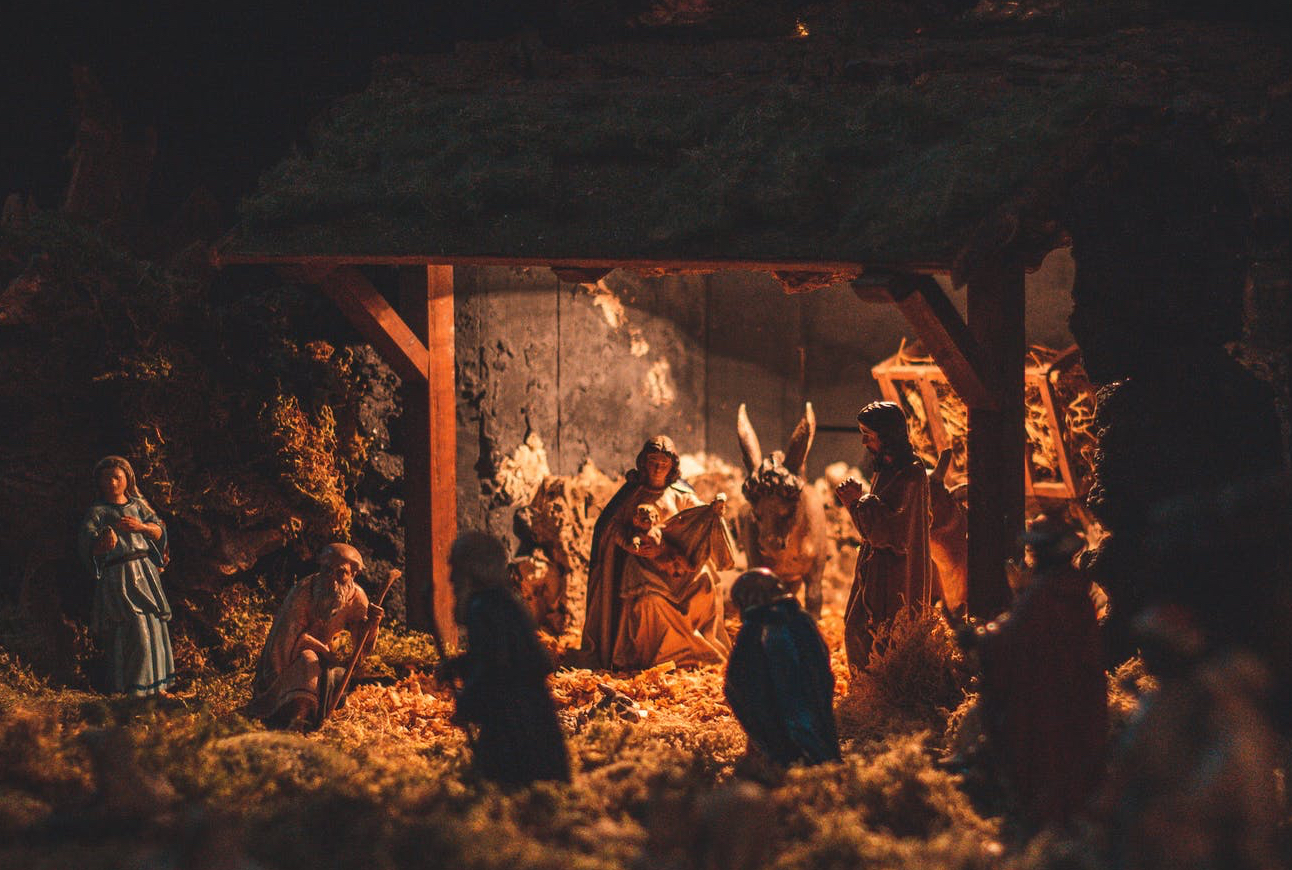
Photo by Burkay Canatar

We have been waiting; we have been watching; we have been preparing, and hope has come. Emmanuel, God with us. Wonderful Counselor, Mighty God, Everlasting Father, and Prince of Peace. A promise is fulfilled! A promise of love that began before time as we know it.

For a second, I imagined what may have followed the scene in the humble stable. First, I imagine all the excitement and joy of those who traveled to bear witness to the splendor of the birth of the Messiah. Then I imagine Joseph and Mary, socially saturated, needing rest, and baby Jesus needing to be fed. Finally, everyone tired after the visitation will turn and head home.

I think about the conversations on the way out. “That was so awesome! Good to see mother and baby looking so well. I hope the gifts we brought are what they needed.

And maybe there are questions like…What does this mean? What do we do now? Do you feel different? What should we do tomorrow?

Would those who traveled to this momentous occasion go back to their everyday lives? Would they be transformed? Do we feel transformed? What do we do now? How do we hold onto the joy that we felt just moments ago?

Happiness is a condition of circumstance, but joy is a condition of the heart. Joy comes not from achieving what we long for—-but from moving toward it. Transformation takes place not from our willpower and action but from allowing grace and love to fill the places of our hearts that feel most unlovable. And joy comes when we accept that we are part of a whole that began at creation—God – us – community.

In John’s Gospel, we hear that Jesus has always been. “In the beginning, was the Word, and the Word was with God, and the Word was God. He was at the beginning with God. All things came into being through him, and not one thing came into being without him. Life has come into being in him, and life was the light of all people.”

Jesus has always been with us. Yet this baby, vulnerable and small, born into the risky business of being human, changes everything. The moment in the modest stable was a happy one, but the joy that lasts beyond this moment comes from the continual movement toward that which we long for. God is always moving toward us. So we, longing for unconditional, vulnerable love, must also move into this risky business of being human, vulnerable, and loving.

David Benner, in his book “Surrender to Love,” says
“Regardless of what you have come to believe about God based on your life experience, the truth is that when God thinks of you, love swells in his heart, and a smile comes to his face. God bursts with love for humans. He is far from being emotionally uninvolved with his creation. God’s bias toward us is strong, persistent and positive. The Christian God chooses to be known as love, and that love pervades every aspect of God’s relationship with us.”

Jesus comes as a child with a heart wide open, loving, and forgiving. This child carries transformational love.

Receiving love while trying to earn it is not transformational. We often act as if we have some control over how much we are loved. But God’s Love for us has everything to do with who he is, not who we are. He loves us not because of who we are; —–we are because he loves us. And he pursues us with great desire and hope that we will surrender to His Love.

We will make mistakes, and those mistakes can make us feel unlovable. Those places where we feel most unlovable cause us pain. But pain is not the enemy.
It leads to self-discovery.
It leads to a deep need for God.
It leads to a need for others.

Mistakes are made, and we will continue to make them. However, the transformation that began at the birth of our savior was the transformation of the heart and what motivates us to move about in the world the way we do.

In Galatians, we hear that God sent the spirit of his son into our hearts. “Crying, Abba, Father!” We are no longer slaves but children of God. Jesus transforms our motivation from fear of discipline to the pursuit of love and surrendering to it. Surrendering to love begins in the heart and expresses itself in our behavior.

A child, this child, teaches us how to love. Love opens our hearts to joy.

We are no longer under disciplinary law. We are no longer slaves. Our actions are no longer centered on avoiding sin, no longer motivated by self-protection, fear, and seeking approval.

WE are children of God. We are heirs. We are created in love, by love, for love. When we live into this love, our motivation for action becomes love. Our actions become a movement toward God and each other.

Jesus didn’t come into the world afraid he didn’t come into the world self-protecting. He came in vulnerable and small and his parents, motivated by love, set out to provide for this child, who will give his whole life to provide for us an example of what love as a motivator looks like.

Surrender in safety, abandon fear, control, and unworthiness.
Practice gratitude, compassion, courage.
Intimacy is vulnerable. Love and allow the joy that comes–to shine into the dark places of your heart and mind. Then, like the child wrapped in his parents’ embrace, trust everything will be okay.

Love is the light that shines in the darkness. Jesus is the light of the world. With him, and all things came into being, and not one thing came into being without him. In the presence of light, darkness cannot exist.

Joy comes from knowing that love is present in all things. Therefore, we must be in pursuit, and whatever else happens, love will prevail.

In verse 4 of Psalm 147, we hear just how detailed God’s Love is; “He counts the number of the stars and calls them all by their names.” No matter how many people have walked this earth, we each have value and purpose. We each can bring light by loving.

The star in being a star brings light into the world. We being children of light, bring light into the world. As we return to day-to-day routines, we may continue to do the same activities. However, our actions are no longer acts of will; they are a response to love.

What has been concealed in the Old Testament is revealed in the New Testament. We have moved from hope to joy! We are transformed!

Like Mary and Joseph, we are asked to respond to love with love.
Love has come. Emanuel God with us, vulnerable and open.
Will you cherish, nurture and help him grow?
Will you surrender to love and let love transform you?
Will you allow the joy that fills your heart to penetrate deeply?
Will you go out into the world as light?

When the risky business of being human seems too much, love holds you, protects you, strengthens you, and cherishes you just as you are.